Context
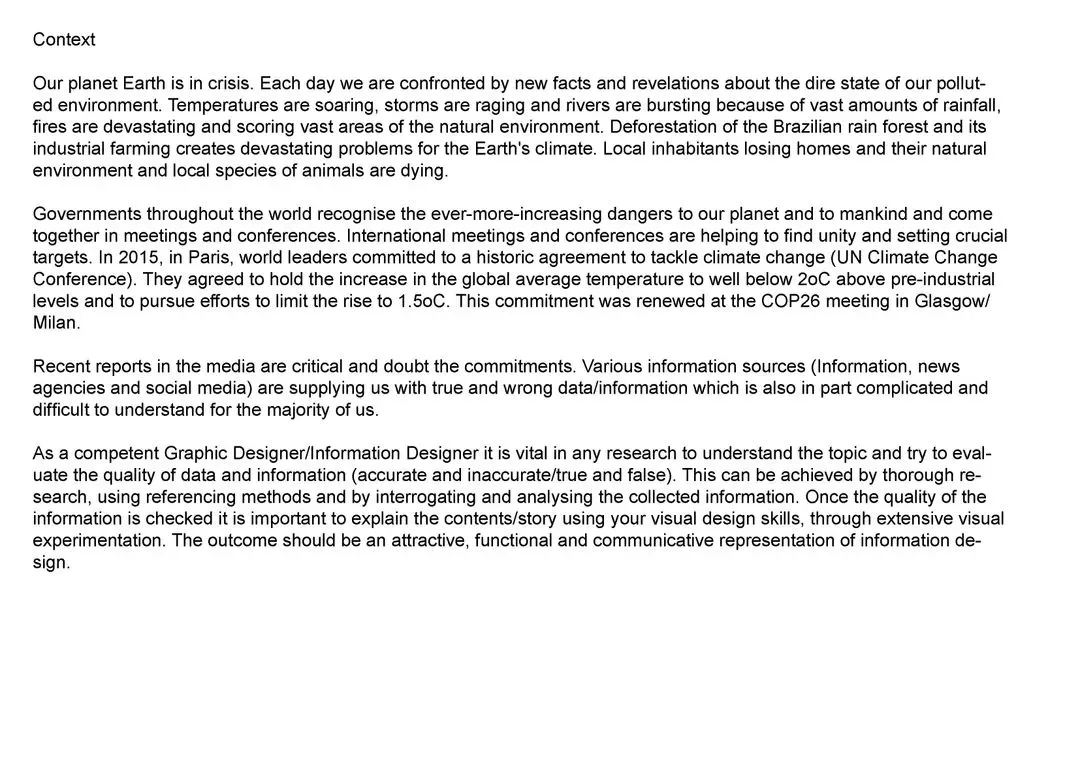
Our planet Earth is in crisis. Each day, we are confronted by new facts and revelations about the dire state of our polluted environment. Temperatures are soaring, storms are raging, and rivers are bursting with water due to heavy rainfall; fires are devastating, scorching vast areas of the natural environment. Deforestation of the Brazilian rainforest and its industrial farming create devastating problems for the Earth's climate. Local inhabitants are losing their homes and their natural environment, and local species of animals are dying.
Governments throughout the world recognise the ever-increasing dangers to our planet and to mankind and come together in meetings and conferences. International meetings and conferences are helping to find unity and set crucial targets. In 2015, in Paris, world leaders committed to a historic agreement to tackle climate change (UN Climate Change Conference). They agreed to hold the increase in the global average temperature to well below 2 °C above pre-industrial levels and to pursue efforts to limit the rise to 1.5 °C. This commitment was renewed at the COP26 meeting in Glasgow/Milan.
Recent media reports are critical and question the commitments. Various information sources (Information, news agencies, and social media) are supplying us with both true and false data, which is also, in part, complicated and difficult for the majority of us to understand.
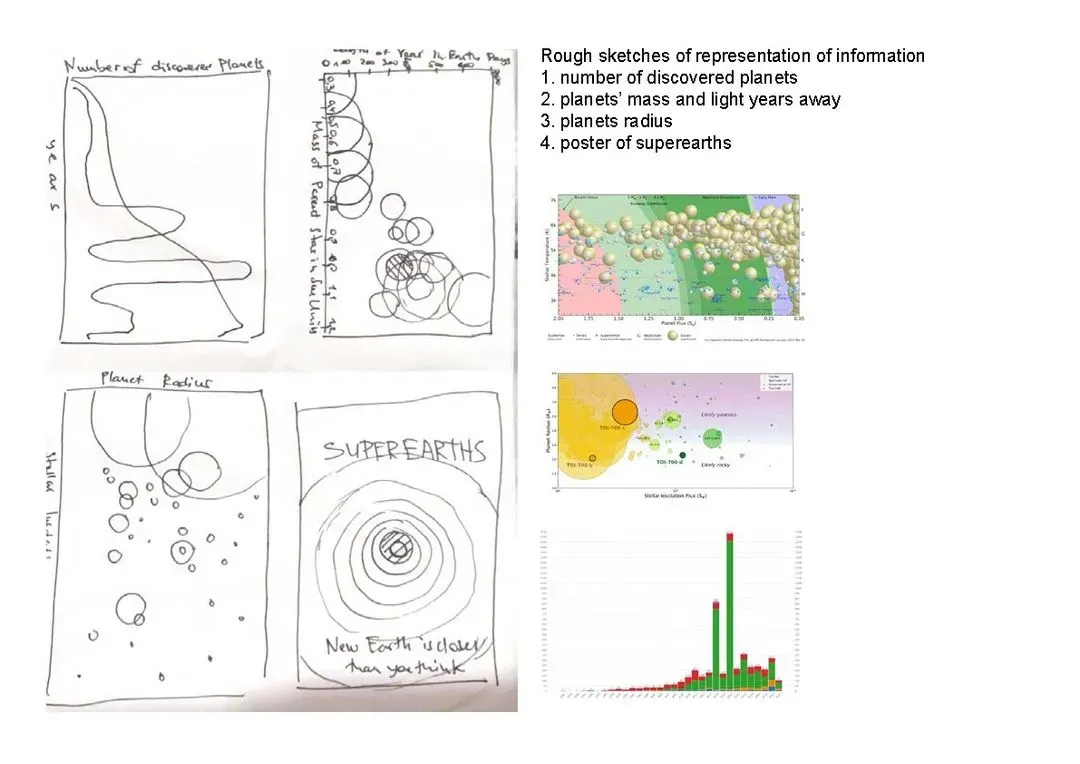
As a competent Graphic Designer/Information Designer, it is vital in any research to understand the topic and evaluate the quality of data and information (accurate vs inaccurate; true vs false). This can be achieved through thorough research, the use of referencing methods, and interrogation and analysis of the collected information. Once the quality of the information is checked, it is important to explain the contents/story using your visual design skills, through extensive visual experimentation. The outcome should be an attractive, functional and communicative representation of information design.